How Egyptians worked meteorite iron nearly two thousand years before Tutankhamun
Ashraf Osman ·
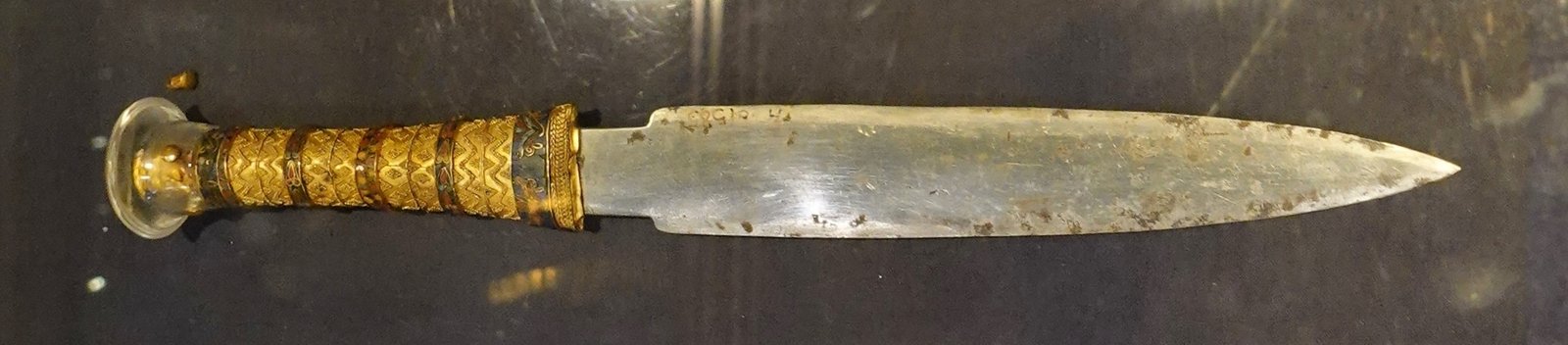
In 1925, Howard Carter's team found an iron dagger tucked into Tutankhamun's mummy wrappings. Its gold hilt was magnificent. Its well-preserved blade was the greater mystery.
Egypt had no established iron-smelting industry in the boy king's time. So where had the metal come from?
Tutankhamun's iron dagger, Egyptian Museum, Cairo. Olaf Tausch / Wikimedia Commons, CC BY 3.0.[4]
The fingerprint in the blade
In 2016, scientists tested the blade without cutting it. They measured 10.8% nickel and 0.58% cobalt, a composition strongly supporting a meteoritic origin. The iron had arrived from space.[1]
Iron ore must be smelted: heated under conditions that remove its oxygen. The metal need not melt. An iron meteorite offers a shortcut: metal already formed inside an asteroid, ready for a skilled smith to shape.
9 beadsEgypt's earliest known iron objects
~3200 BCEGerzeh beads predate the pyramids
10.8% nickelMeasured in the dagger in 2016
Before the pyramids
At Gerzeh, south of Cairo, nine small iron beads were buried around 3200 BCE. In 2013, scientific analysis confirmed their meteoritic origin. Imaging revealed the workmanship: metal hammered into thin sheets, then rolled into tubes.[2]
These craftsmen were already shaping a difficult, unfamiliar metal almost two millennia before Tutankhamun. They did not need to extract iron from rock. They needed to recognise and work what the sky had delivered.
From meteorite to bead
MeteoriteSelect a metal fragment
HammerShape it into a thin sheet
RollForm the sheet into a tube
Schematic sequence for the Gerzeh beads; based on Rehren and colleagues.[2]
Nearly two thousand years of sky iron
~3200 BCEGerzeh beads are buried.
14th century BCETutankhamun is buried with his iron dagger.
2013Tests confirm the beads' meteoritic origin.
2016–2022Studies establish the dagger's origin and investigate its forging.
A smith's skill written in metal
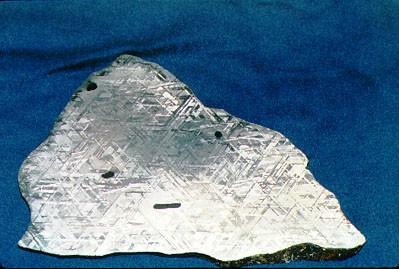
Slow cooling inside some asteroids creates crossing bands of iron–nickel crystals: a Widmanstätten pattern.
A 2022 study found traces of this pattern in the dagger. Together with other evidence, it supports forging below about 950°C. Its maker shaped the metal through controlled heating and hammering.[3]
Gibeon meteorite slice, a comparison specimen, not the dagger's source. NASA, public domain.[5]
A royal gift from abroad
Who made it? The Amarna letters record an iron dagger sent by the king of Mitanni to Amenhotep III, Tutankhamun's grandfather. The 2022 study also found clues in the hilt's adhesive suggesting foreign manufacture. Tutankhamun's dagger might have been an inherited diplomatic gift, but no evidence securely identifies it as that particular dagger.[3]
Long before iron became an everyday material, Egyptians turned metal from space into objects worth treasuring.
The beads show early Egyptian skill in working meteoritic iron. The dagger shows extraordinary Bronze Age craftsmanship, possibly from abroad. Neither establishes that iron tools built the pyramids.
Ashraf Osman writes about ancient Egypt for everyone who loves it, starting with children and young adults. His books for young readers tell Egyptian history from a human point of view, so readers live the experience instead of memorising dates. This is episode 2 of Kemet Beyond the Pyramids.
Sources and image credits
Comelli et al. (2016), The meteoritic origin of Tutankhamun's iron dagger blade. doi.org/10.1111/maps.12664
Matsui et al. (2022), The manufacture and origin of the Tutankhamen meteoritic iron dagger. doi.org/10.1111/maps.13787
Olaf Tausch, Kairo Museum Eisendolch Tutanchamun 01.jpg, Wikimedia Commons. CC BY 3.0. Photograph unchanged.
NASA, Widmanstatten IronMet.JPG, Wikimedia Commons. Public domain.
كِمِت.. ما وراء الأهرام · الحلقة الثانية
معدن من السماء
كيف شكّل المصريون حديد النيازك قبل توت عنخ آمون بنحو ألفي عام
أشرف عثمان ·
في عام 1925، عثر فريق هوارد كارتر على خنجر من الحديد بين لفائف مومياء توت عنخ آمون. كان مقبضه الذهبي رائعًا، لكن نصله المحفوظ جيدًا كان اللغز الأكبر.
لم تكن في مصر صناعة راسخة لصهر الحديد في عصر الملك الصغير. فمن أين جاء هذا المعدن؟
خنجر توت عنخ آمون الحديدي، المتحف المصري بالقاهرة. تصوير أولاف تاوش / ويكيميديا كومنز، رخصة CC BY 3.0.[4]
البصمة في النصل
في عام 2016 فحص العلماء النصل دون أن يقطعوا منه شيئًا، فوجدوا فيه 10.8% من النيكل و0.58% من الكوبالت، وهو تركيب يرجّح بقوة أن أصله نيزكي. لقد جاء هذا الحديد من الفضاء.[1]
خام الحديد لا بد أن يُصهر: أي يُسخَّن في ظروف تنزع منه الأكسجين، دون حاجة إلى أن يذوب المعدن. أما النيزك الحديدي فيختصر الطريق: معدن تكوّن جاهزًا داخل كويكب، ينتظر حدادًا ماهرًا يشكّله.
9 خرزاتأقدم قطع حديد معروفة في مصر
نحو 3200 ق.مخرزات الجرزة أقدم من الأهرامات
10.8% نيكلقيست في الخنجر عام 2016
قبل الأهرامات
في الجرزة، جنوب القاهرة، دُفنت تسع خرزات صغيرة من الحديد نحو عام 3200 قبل الميلاد. وفي عام 2013 أكد التحليل العلمي أن أصلها نيزكي، وكشف التصوير طريقة صنعها: معدن طُرق رقائق رفيعة، ثم لُفّ على هيئة أنابيب.[2]
كان هؤلاء الحرفيون يشكّلون معدنًا صعبًا غير مألوف قبل توت عنخ آمون بنحو ألفي عام. لم يكونوا بحاجة إلى استخراج الحديد من الصخر، بل إلى أن يتعرّفوا على ما أرسلته السماء ويُحسنوا تشكيله.
من النيزك إلى الخرزة
النيزكاختيار قطعة من المعدن
الطَّرقتشكيلها رقيقةً رفيعة
اللَّفلفّ الرقيقة على هيئة أنبوب
تسلسل توضيحي لصناعة خرزات الجرزة، استنادًا إلى ريرن وزملائه.[2]
قرابة ألفي عام من حديد السماء
نحو 3200 ق.مدفن خرزات الجرزة.
القرن 14 ق.مدفن توت عنخ آمون ومعه خنجره الحديدي.
2013الفحوص تؤكد الأصل النيزكي للخرزات.
2016–2022دراسات تثبت أصل الخنجر وتبحث طريقة طَرقه.
مهارة الحداد مكتوبة في المعدن
حين يبرد الحديد ببطء داخل بعض الكويكبات، تتكوّن أشرطة متقاطعة من بلورات الحديد والنيكل، تُعرف بنمط فيدمانشتاتن.
ووجدت دراسة عام 2022 آثارًا لهذا النمط في الخنجر. ومع أدلة أخرى، يرجّح ذلك أنه طُرق على حرارة أقل من نحو 950 درجة مئوية، وأن صانعه شكّل المعدن بالتسخين والطَّرق المحسوبين.[3]
شريحة من نيزك جيبيون للمقارنة، وليست مصدر حديد الخنجر. ناسا، ملكية عامة.[5]
هدية ملكية من الخارج
من صنعه؟ تسجّل رسائل العمارنة خنجرًا من الحديد أرسله ملك ميتاني إلى أمنحتب الثالث، جدّ توت عنخ آمون. ووجدت دراسة عام 2022 أيضًا في مادة تثبيت المقبض ما يشير إلى صناعة أجنبية. ربما كان خنجر توت عنخ آمون هدية دبلوماسية موروثة، لكن لا دليل يثبت يقينًا أنه ذلك الخنجر بعينه.[3]
قبل أن يصبح الحديد مادة يومية بزمن طويل، حوّل المصريون معدنًا من الفضاء إلى كنوز تستحق الاقتناء.
تُظهر الخرزات مهارة المصريين المبكرة في تشكيل الحديد النيزكي، ويُظهر الخنجر حِرفية استثنائية من العصر البرونزي، ربما من خارج مصر. ولا يثبت أيٌّ منهما أن أدوات الحديد بنت الأهرامات.
يكتب أشرف عثمان عن مصر القديمة لكل من يحبها، بدءًا بالأطفال والشباب. وتروي كتبه للقراء الصغار تاريخ مصر من منظور إنساني، فيعيش القارئ التجربة بدل أن يحفظ التواريخ. هذه هي الحلقة الثانية من سلسلة «كِمِت.. ما وراء الأهرام».
المصادر وحقوق الصور
Comelli et al. (2016), The meteoritic origin of Tutankhamun's iron dagger blade. doi.org/10.1111/maps.12664