For two thousand years, Egypt ran without coins. Its builders, scribes and soldiers were paid in grain.
Ashraf Osman ·
Ask what the builders of the pyramids earned, and the honest answer is: lunch. And breakfast, and dinner, and something to drink with it.
Egypt had no coins until very late in its history. Value was counted in grain, and grain turned into the two things every Egyptian ate every day: bread and beer. The most common prayer carved in Egyptian tombs asks the gods for exactly that: "a thousand of bread, a thousand of beer" for the dead.
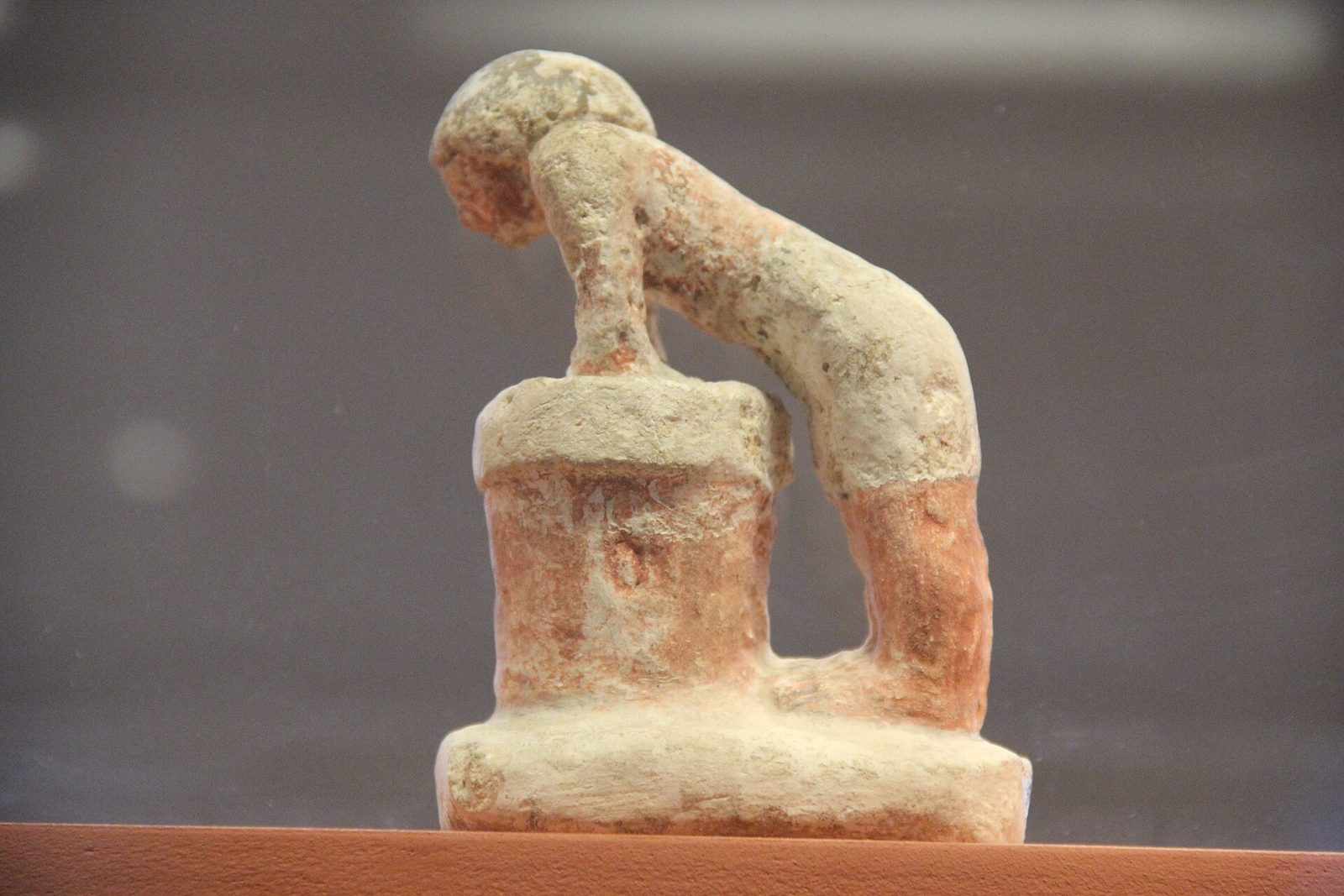
A brewer kneading fermenting dough over a vat. Painted limestone, end of the Old Kingdom, about 2200 BCE. Louvre Museum, Paris. Gary Todd / Wikimedia Commons, CC0.[7]
10 loavesA labourer's daily wage in one Middle Kingdom list
5½ sacksA tomb-builder's monthly grain wage at Deir el-Medina
18 daysHow late the grain was when workers first went on strike
Two grains, two staples
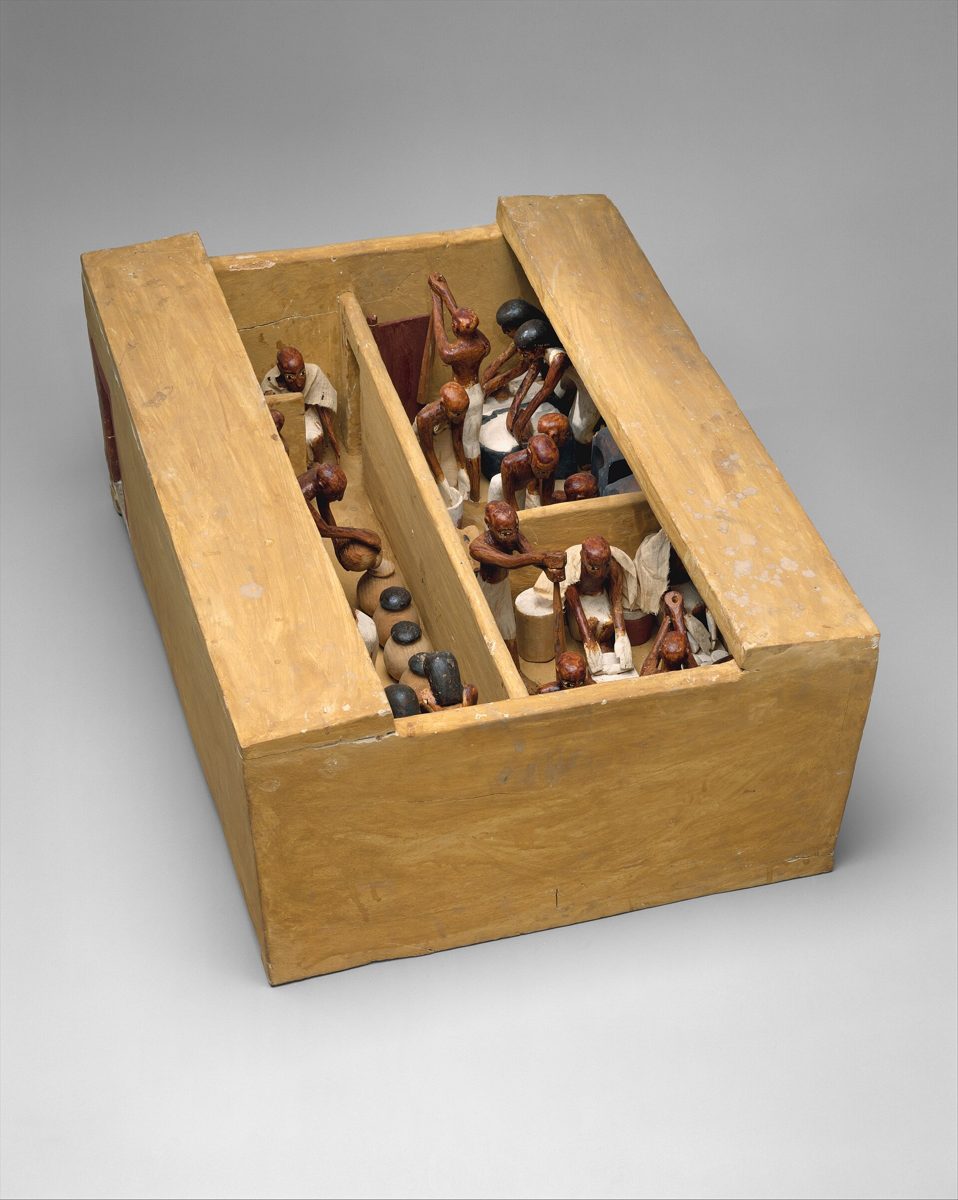
Egyptian farmers grew two main cereals: emmer wheat and barley. Emmer went mostly into bread, barley mostly into beer. Egyptian beer was thick, cloudy and filling, closer to a nourishing drink than to the beer we know. Tomb scenes and wooden models show every step: women grinding grain on stone, dough being shaped and baked, mash being strained into jars.[1]
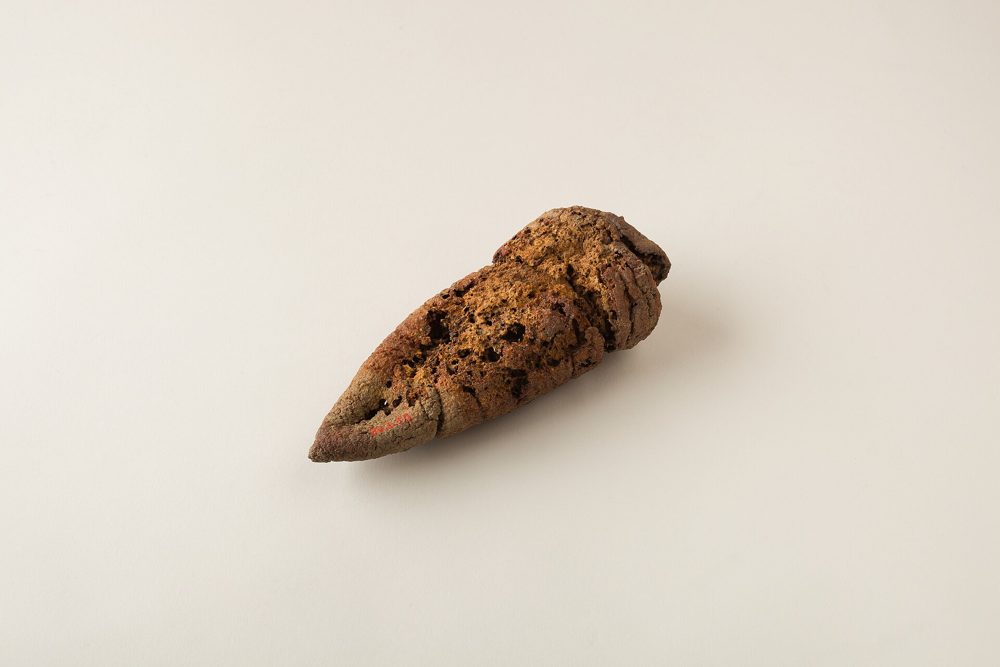
How one harvest became bread, beer and a wage.A real Egyptian loaf, dried and preserved for thousands of years. Metropolitan Museum of Art, New York. Wikimedia Commons, CC0.[8]A whole bakery and brewery in miniature: grinding, kneading, baking and brewing, from the tomb of Meketre, about 1980 BCE. Metropolitan Museum of Art. Wikimedia Commons, CC0.[9]
Feeding the pyramid town
In 1991, Mark Lehner's team found two bakeries in the workers' town south of the Giza plateau, with their hearths, their vats and their pottery bread moulds still in place.[2] Thousands of these bell-shaped moulds, called bedja, have since been found there. The largest held enough dough for a loaf that could feed eight to ten people.[3]
Bread was not the whole menu. Based on the animal bones found at the site, archaeologists estimate that the workers ate several thousand cattle and over fifteen thousand sheep and goats a year, as well as fish.[3] And in the papyri from the Red Sea we met in Episode 3, the boat crews' rations were measured out according to each man's rank.
A well-fed workforce was not kindness. It was how the king got his pyramid built on time.
Doing the sums
Egyptian scribes learned to divide wages in school. One exercise in the Rhind Mathematical Papyrus asks how to share 100 loaves among ten men when three of them earn a double share. The answer: 7 9/13 loaves each for the seven ordinary men, and 15 5/13 for the three senior ones.[1]
The answer a scribe was expected to find, drawn out.
A Middle Kingdom temple list from Lahun gives a real wage: about ten loaves a day for a labourer or porter, with a ration of beer. Bread and beer even had an official exchange rate, called pesu, which measured how much grain had gone into each loaf or jug. A jar of beer was worth the same as a loaf made from the same amount of flour.[1]
Grain as money
Because everyone needed grain, everyone accepted it. A sack of grain worked like a purse. A Fifth Dynasty tomb at Saqqara shows a buyer handing over two measures of wheat for six loaves.[1] For larger deals, values were written in a weight of copper, the deben, but the payment itself could be made in grain, oil, cloth or animals.
The best-paid workers in Egypt
Fifteen hundred years after the pyramids, the craftsmen who cut and painted the royal tombs in the Valley of the Kings lived in their own village, Deir el-Medina. Their ration lists survive. A workman received 4 sacks (khar) of emmer and 1½ sacks of barley every month.[4] A New Kingdom khar held roughly 77 litres.[5]
One sack (khar) held roughly 77 litres. Diagram based on the Deir el-Medina ration lists and Nunn's estimate.[4]
That was far more than one family could eat. The physician and Egyptologist John Nunn estimated it at over 35,000 calories a day, about ten times what a manual worker needs.[4] The extra grain was spent: on furniture, on cloth, on a coffin, on a goat.
"We are hungry"
Wages in grain had one weakness. If the granaries were empty, there was nothing to pay with. In the 29th year of Ramesses III, around 1158 BCE, the tomb-builders' rations came late again and again. The workmen put down their tools and sat in protest outside the royal mortuary temples on the west bank. A scribe recorded their words:
The first recorded strike
"We are hungry, for 18 days have already elapsed this month."[6]
Officials released some grain, then not enough, and the protests continued until the workers threatened to take their complaint to the vizier himself. Only then were they paid in full.[6]
~2560 BCEBakeries feed the pyramid builders at Giza.
~1850 BCEThe Lahun lists set a labourer's day at about ten loaves.
~1550 BCEThe Rhind Papyrus teaches scribes to divide loaves into wages.
~1158 BCETomb-builders strike when their grain is 18 days late.
1991Archaeologists uncover the Giza bakeries.
Bread and beer sound humble. But they were Egypt's salary, its currency and its safety net all at once. When they arrived on time, tombs and temples rose. When they did not, even the king's own craftsmen put down their tools.
And behind every loaf was someone grinding the grain, usually a woman. That is the next story: the women of Deir el-Medina.
Ashraf Osman writes about ancient Egypt for everyone who loves it, starting with children and young adults. His books for young readers tell Egyptian history from a human point of view, so readers live the experience instead of memorising dates. This is episode 4 of Kemet Beyond the Pyramids.
Sources and image credits
Hilary Wilson, "Bread, beer and economics," parts 1 and 2, The Past. Part 1 · Part 2
Mark Lehner, "Excavation report," NOVA Online, PBS. pbs.org
Gary Todd, Painted limestone brewer kneading fermenting dough, End of Old Kingdom, c. 2200 BC, Wikimedia Commons. CC0. Resized.
Metropolitan Museum of Art, Loaf of Bread MET 36.3.78, Wikimedia Commons. CC0. Resized.
Metropolitan Museum of Art, Model Bakery and Brewery from the Tomb of Meketre, MET 20.3.12, Wikimedia Commons. CC0. Resized.
كِمِت.. ما وراء الأهرام · الحلقة الرابعة
الأجر خبز وجعة
ألفا عام عاشتها مصر بلا عملات. وكان البنّاؤون والكتبة والجنود يتقاضون أجورهم حبوبًا.
أشرف عثمان ·
إذا سألت كم كان يتقاضى بنّاؤو الأهرام، فالجواب الصادق: الغداء. والفطور والعشاء، وشيئًا يشربونه معه.
لم تعرف مصر العملات إلا في وقت متأخر جدًا من تاريخها. كانت القيمة تُحسب بالحبوب، والحبوب تتحول إلى شيئين يأكلهما كل مصري كل يوم: الخبز والجعة. وأكثر الدعوات تكرارًا على جدران المقابر المصرية تطلب من الآلهة هذا بالتحديد للميت: «ألف من الخبز، وألف من الجعة».
صانع جعة يعجن العجين المخمّر فوق إناء. حجر جيري ملوّن، أواخر الدولة القديمة، نحو 2200 قبل الميلاد. متحف اللوفر، باريس. تصوير Gary Todd / ويكيميديا كومنز، رخصة CC0.[7]
10 أرغفةأجر العامل اليومي في إحدى قوائم الدولة الوسطى
5½ أجولةأجر بنّاء المقابر الشهري من الحبوب في دير المدينة
18 يومًامدة تأخر الحبوب حين أضرب العمال لأول مرة
حبّتان وغذاءان
كان المزارع المصري يزرع نوعين أساسيين من الحبوب: القمح الثنائي (الإمّر) والشعير. يذهب الإمّر في الغالب إلى الخبز، والشعير إلى الجعة. وكانت الجعة المصرية كثيفة عكرة مُشبِعة، أقرب إلى شراب مغذٍّ منها إلى الجعة التي نعرفها اليوم. وتُظهر نقوش المقابر ونماذجها الخشبية كل خطوة: نساء يطحنّ الحبوب على الحجر، وعجين يُشكَّل ويُخبز، ومنقوع يُصفّى في الجرار.[1]
كيف صار الحصاد الواحد خبزًا وجعة وأجرًا.رغيف مصري حقيقي جفّ وحُفظ آلاف السنين. متحف المتروبوليتان، نيويورك. ويكيميديا كومنز، رخصة CC0.[8]مخبز ومصنع جعة كاملان في نموذج مصغّر: الطحن والعجن والخَبز والتخمير، من مقبرة مكت-رع، نحو 1980 قبل الميلاد. متحف المتروبوليتان. ويكيميديا كومنز، رخصة CC0.[9]
إطعام مدينة الهرم
في عام 1991 عثر فريق مارك لينر على مخبزين في مدينة العمال جنوب هضبة الجيزة، ما زالت فيهما المواقد والأحواض وقوالب الخبز الفخارية في أماكنها.[2] ومنذ ذلك الحين وُجدت هناك آلاف من هذه القوالب الجرسية الشكل، واسمها «بِدجا». وكان أكبرها يتسع لعجين رغيف يكفي ثمانية إلى عشرة أشخاص.[3]
ولم يكن الخبز هو الطعام الوحيد. فاستنادًا إلى العظام التي وُجدت في الموقع، يقدّر علماء الآثار أن العمال كانوا يأكلون في العام عدة آلاف من الأبقار وأكثر من خمسة عشر ألفًا من الأغنام والماعز، إلى جانب السمك.[3] وفي برديات البحر الأحمر التي التقينا بها في الحلقة الثالثة، كانت حصص طواقم القوارب تُصرف بحسب رتبة كل رجل.
لم يكن إطعام العمال جيدًا كرمًا، بل كان الطريقة التي ضمن بها الملك أن يكتمل هرمه في موعده.
حساب الأجور
كان الكتبة المصريون يتعلّمون تقسيم الأجور في المدرسة. ففي بردية رايند الرياضية تمرين يسأل: كيف تُقسَّم 100 رغيف على عشرة رجال، ثلاثة منهم يستحقون نصيبًا مضاعفًا؟ والجواب: 7 و9/13 رغيف لكل واحد من السبعة، و15 و5/13 لكل واحد من الثلاثة الكبار.[1]
الحل الذي كان على الكاتب أن يصل إليه، مرسومًا.
وتذكر قائمة من معبد اللاهون في الدولة الوسطى أجرًا حقيقيًا: نحو عشرة أرغفة في اليوم للعامل أو الحمّال، مع حصة من الجعة. بل كان للخبز والجعة سعر صرف رسمي اسمه «بِسُو»، يقيس كمية الحبوب التي دخلت في كل رغيف أو جرة. فجرة الجعة تساوي رغيفًا صُنع من القدر نفسه من الدقيق.[1]
الحبوب نقودًا
ولأن الجميع يحتاجون إلى الحبوب، كان الجميع يقبلونها. فكيس الحبوب كان يعمل عمل الكيس المليء بالنقود. وفي مقبرة من الأسرة الخامسة في سقارة مشهد لمشترٍ يدفع مكيالين من القمح ثمنًا لستة أرغفة.[1] أما الصفقات الكبيرة فكانت قيمتها تُكتب بوزن من النحاس اسمه «دِبن»، لكن الدفع نفسه قد يكون حبوبًا أو زيتًا أو قماشًا أو ماشية.
أعلى العمال أجرًا في مصر
بعد الأهرام بألف وخمسمئة عام، كان الحرفيون الذين ينحتون المقابر الملكية في وادي الملوك ويلوّنونها يعيشون في قرية خاصة بهم هي دير المدينة. وقد بقيت قوائم حصصهم. كان العامل يتقاضى كل شهر 4 أجولة («خار») من الإمّر وجوالًا ونصفًا من الشعير.[4] وكان «الخار» في الدولة الحديثة يسع نحو 77 لترًا.[5]
كان الجوال («الخار») يسع نحو 77 لترًا. الرسم مبني على قوائم حصص دير المدينة وتقدير جون نَن.[4]
وكان ذلك أكثر بكثير مما تأكله أسرة واحدة. فقد قدّره الطبيب وعالم المصريات جون نَن بأكثر من 35 ألف سعر حراري في اليوم، أي نحو عشرة أضعاف ما يحتاجه عامل يدوي.[4] وكانت الحبوب الزائدة تُنفق: على الأثاث، والقماش، والتابوت، والماعز.
«نحن جائعون»
لكن الأجر بالحبوب كان له موضع ضعف واحد: إذا فرغت الصوامع لم يبقَ ما يُدفع به. ففي العام التاسع والعشرين من حكم رمسيس الثالث، نحو عام 1158 قبل الميلاد، تأخرت حصص بنّائي المقابر مرة بعد مرة. فترك العمال أدواتهم واعتصموا عند المعابد الجنائزية الملكية على الضفة الغربية. وسجّل أحد الكتبة كلماتهم:
أول إضراب مسجّل
«نحن جائعون، فقد مضى من هذا الشهر ثمانية عشر يومًا.»[6]
صرف المسؤولون بعض الحبوب، ثم لم تكفِ، واستمرت الاحتجاجات حتى هدّد العمال برفع شكواهم إلى الوزير نفسه. عندها فقط تقاضوا أجرهم كاملًا.[6]
نحو 2560 ق.ممخابز تطعم بنّائي الأهرام في الجيزة.
نحو 1850 ق.مقوائم اللاهون تجعل أجر العامل نحو عشرة أرغفة يوميًا.
نحو 1550 ق.مبردية رايند تعلّم الكتبة تقسيم الأرغفة أجورًا.
نحو 1158 ق.مبنّاؤو المقابر يُضربون حين تتأخر حبوبهم 18 يومًا.
1991علماء الآثار يكشفون مخابز الجيزة.
يبدو الخبز والجعة شيئين متواضعين، لكنهما كانا في مصر الراتب والعملة وشبكة الأمان معًا. حين يصلان في موعدهما ترتفع المقابر والمعابد، وحين يتأخران يضع حتى حرفيو الملك أدواتهم جانبًا.
ووراء كل رغيف كان هناك من يطحن الحبوب، وغالبًا امرأة. وتلك هي الحكاية التالية: نساء دير المدينة.
يكتب أشرف عثمان عن مصر القديمة لكل من يحبها، بدءًا بالأطفال والشباب. وتروي كتبه للقراء الصغار تاريخ مصر من منظور إنساني، فيعيش القارئ التجربة بدل أن يحفظ التواريخ. هذه هي الحلقة الرابعة من سلسلة «كِمِت.. ما وراء الأهرام».
المصادر وحقوق الصور
Hilary Wilson, "Bread, beer and economics," parts 1 and 2, The Past. Part 1 · Part 2
Mark Lehner, "Excavation report," NOVA Online, PBS. pbs.org