The oldest written papyri ever found are not a hymn or a king's boast. They are a work log.
Ashraf Osman ·
In March 2013, a French and Egyptian team was digging at Wadi al-Jarf, a forgotten harbour on the Red Sea coast. Inland from the shore, a row of storage galleries had been cut into the limestone hills. Long ago, someone had sealed them with heavy blocks.
Wedged between those blocks were rolls and fragments of papyrus. When archaeologist Pierre Tallet and his colleagues read them, they found the name of a man called Merer, and a place called Akhet-Khufu: "Horizon of Khufu." That was the Great Pyramid's original name.[1]
For the first time, we could read the words of someone who helped build it.
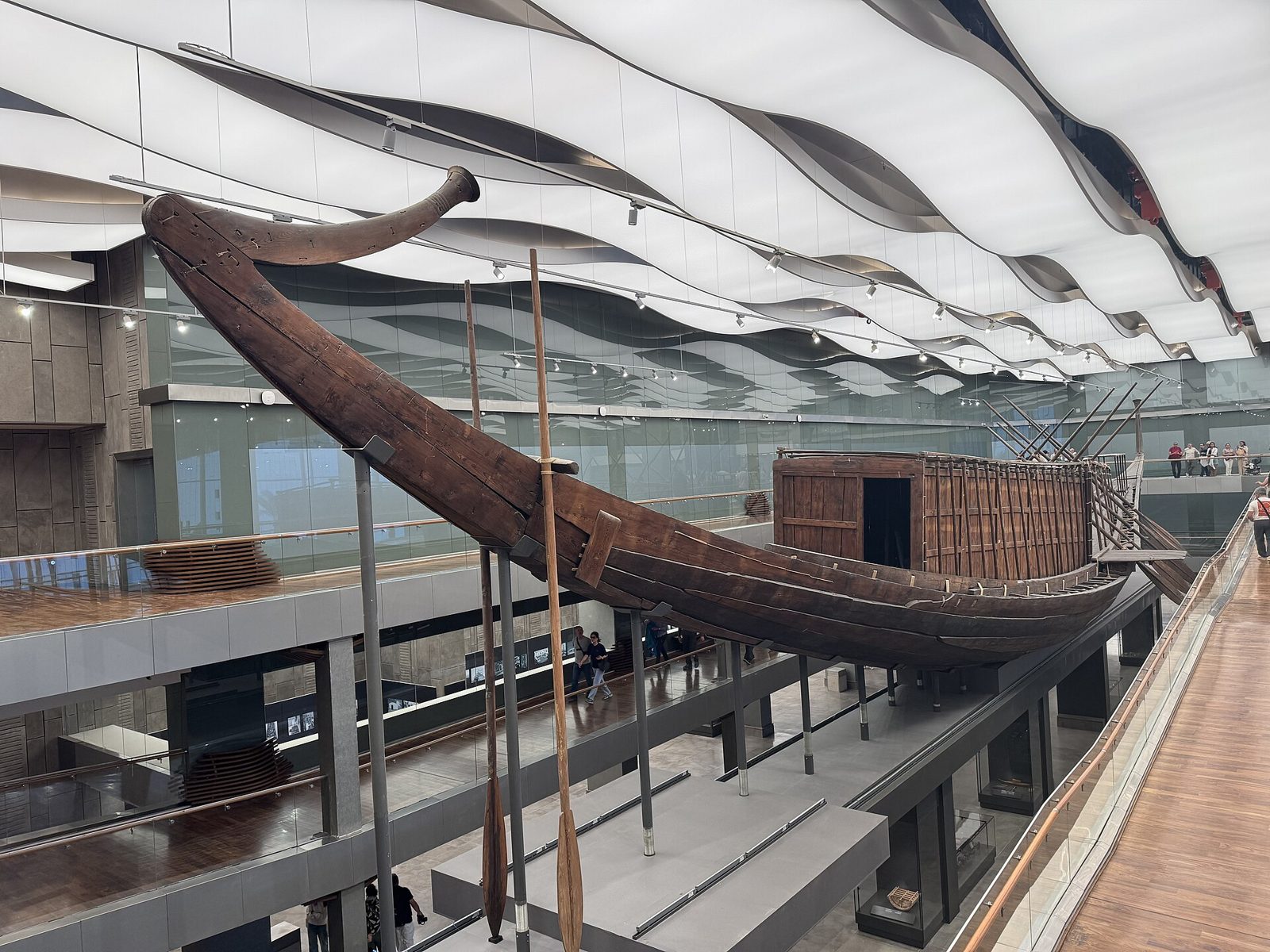
Khufu's own boat, found beside the Great Pyramid, now at the Grand Egyptian Museum. Merer's cargo boats were plainer working vessels of the same age. Alena Belova for Exhibo / Wikimedia Commons, CC BY-SA 4.0.[7]
~4,500 yearsThe oldest papyri with writing ever found
4 daysOne round trip from the quarry to Giza and back
~200 blocksCarried by Merer's crew in a month
Who was Merer?
Merer was not a king, a priest or an architect. His title was inspector, a middle-ranking officer in charge of a crew of boatmen. He kept a day-by-day record of their work, set out in columns like a table: one block of entries for each day of the month.[2]
The best-preserved pages cover a few months in the 27th year of Khufu's reign, around 2560 BCE. The pyramid was nearly finished. What remained was the casing: the fine white limestone that once covered it in a smooth, shining skin.[3]
A week on the river
The white limestone came from the quarries at Tura, on the east bank of the Nile, south-east of Giza. Merer's job was to bring it over. The log repeats the same rhythm, trip after trip.
LoadBlocks are loaded at the Tura quarries
SailOvernight stop at She-Khufu, "the Lake of Khufu"
DeliverBlocks reach the harbour at Akhet-Khufu
ReturnEmpty boats sail back south to Tura
The route as recorded in Papyrus Jarf A and B; after Tallet.[1]
Loaded with stone, downstreamReturning empty, upstreamPlaces named in the log
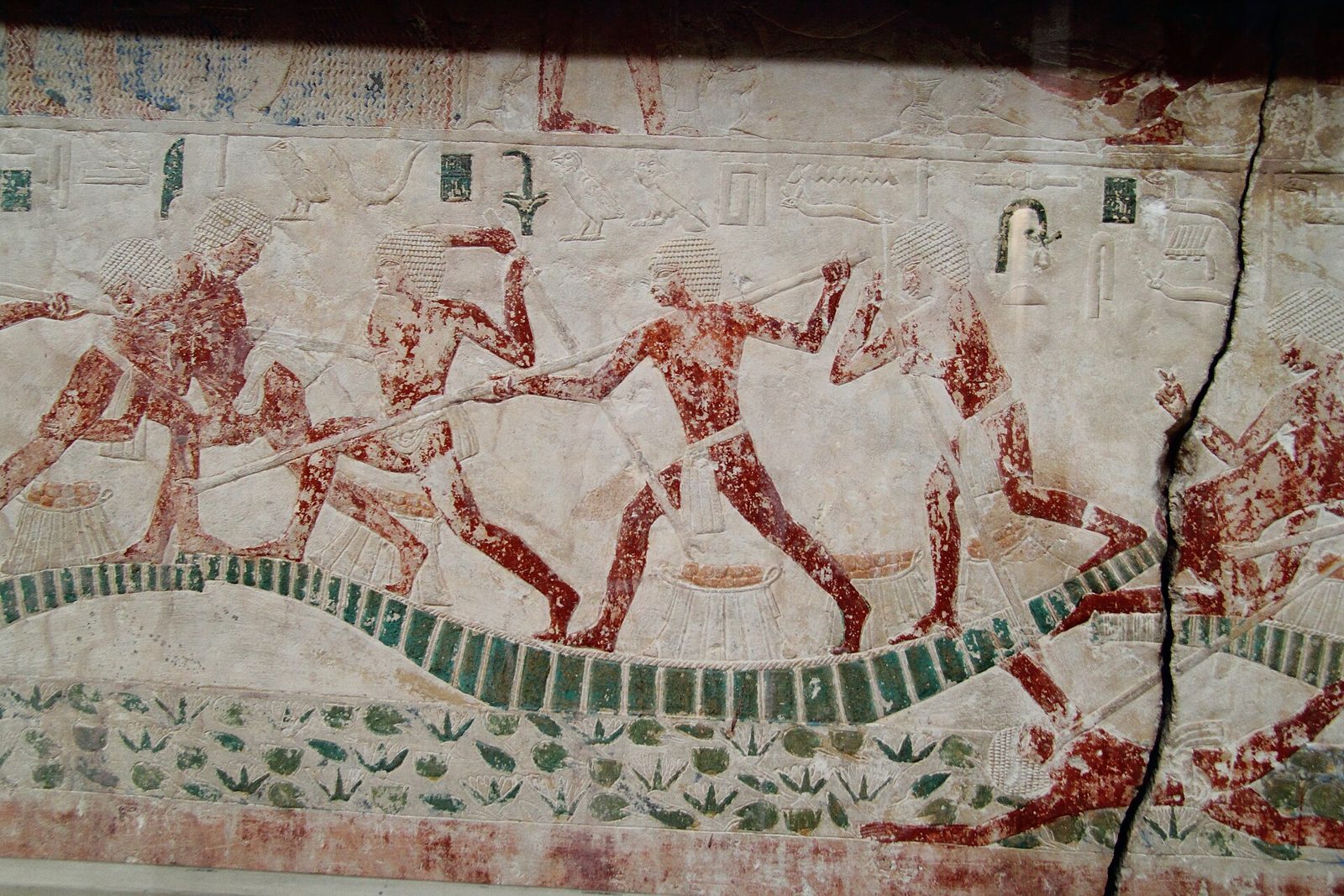
Merer's round trip in the flood season: about four days from Tura to Akhet-Khufu and back. The Nile then ran closer to Giza than it does today, so the river's position here is only approximate.[1]Boatmen at work, in a painted tomb relief at the Egyptian Museum, Cairo. Djehouty / Wikimedia Commons, public domain.[8]
A few lines, in translation:
From Merer's log
Day 26: "Inspector Merer sets sail with his crew [za] from south Tura, laden with stone blocks, to Akhet-Khufu."
Day 28: "Set sail from Akhet-Khufu in the morning; navigate up the river towards south Tura."[3]
A crew could make two or three such trips in ten days, about thirty blocks each time, each block weighing two to three tonnes.[2]
Water all the way to the building site
Merer worked from July to November, the season when the Nile flooded the valley. The flood was not an obstacle. It was the road.
The log describes artificial basins and channels at Giza that let the boats sail almost to the foot of the plateau. Their names survive in Merer's handwriting: the "Lake of Khufu," and the harbour at its mouth, "Ro-She Khufu."[3]
The Great Pyramid was not only built on land. It was supplied by water, one boatload at a time.
The man in charge
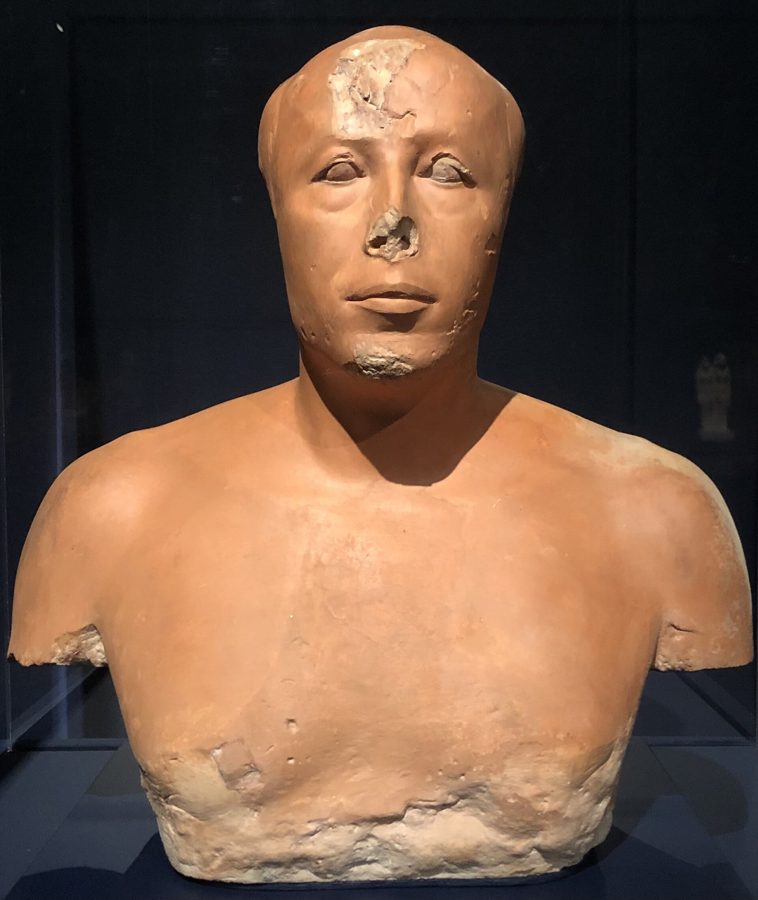
The log also names Merer's superior: "the noble Ankh-haf, director of Ro-She Khufu."[3] Ankhhaf was Khufu's half-brother, and his finely painted limestone bust, found in his tomb at Giza, is now in the Museum of Fine Arts in Boston.[4] In Merer's pages we meet him not as a statue, but as the man whose harbour the boats were sailing into.
Bust of Ankhhaf, Museum of Fine Arts, Boston. Implacable18 / Wikimedia Commons, CC0.[9]
Paid, fed and counted
Other papyri from the same find are accounts. They record the rations given to the crews: grain, bread, beer and other food, measured according to each man's rank.[3] These are the records of an organised, paid workforce. They fit what archaeologists have found in the workers' town at Giza, and they leave no room for the old picture of slaves driven by whips.
Why on the Red Sea?
If Merer worked at Giza, why were his papers found nearly 120 kilometres south of Suez?[5] Crews like his moved wherever the king needed them. Wadi al-Jarf was a royal harbour, the starting point for expeditions across the Red Sea to the copper mines of Sinai. Boats were stored in its galleries between voyages. When the harbour was abandoned at the end of Khufu's reign, the papyri were left behind with the sealed galleries.[1]
From the harbour to the museum
~2560 BCEMerer's crew carries casing stone to Giza.
1832Traveller J. G. Wilkinson records ruins at Wadi al-Jarf.
March 2013The papyri are found between the blocks sealing the galleries.
July 2016Pages of the log are shown for the first time, at the Egyptian Museum in Cairo.[6]
Merer never mentions ramps, levers or how the blocks were raised. He was not writing for us. He was writing so that someone could check his work: where his boats were, what they carried, and when.
That is exactly why his diary matters. The great inscriptions tell us what kings wanted remembered. Merer's columns tell us what actually happened on an ordinary working day on the Nile.
Ashraf Osman writes about ancient Egypt for everyone who loves it, starting with children and young adults. His books for young readers tell Egyptian history from a human point of view, so readers live the experience instead of memorising dates. This is episode 3 of Kemet Beyond the Pyramids.
Sources and image credits
Pierre Tallet and Mark Lehner (2021), The Red Sea Scrolls: How Ancient Papyri Reveal the Secrets of the Pyramids. Thames & Hudson. thamesandhudson.com
أقدم برديات مكتوبة عُثر عليها ليست ترنيمة ولا تفاخرًا لملك، بل سجلّ عمل.
أشرف عثمان ·
في مارس 2013 كان فريق مصري فرنسي يحفر في وادي الجرف، ميناء منسي على ساحل البحر الأحمر. وفي التلال الجيرية بعيدًا قليلًا عن الشاطئ، كان هناك صفّ من المخازن المنحوتة في الصخر، أغلقه أحدهم منذ زمن بعيد بكتل حجرية ثقيلة.
وبين تلك الكتل وُجدت لفائف وقطع من البردي. وحين قرأها عالم الآثار بيير تاليه وزملاؤه وجدوا فيها اسم رجل يُدعى ميرر، واسم مكان هو «آخت خوفو»، أي «أفق خوفو». وهذا هو الاسم الأصلي للهرم الأكبر.[1]
لأول مرة صار بوسعنا أن نقرأ كلمات رجل شارك في بنائه.
مركب خوفو نفسه، الذي عُثر عليه بجوار الهرم الأكبر، ويُعرض اليوم في المتحف المصري الكبير. أما قوارب ميرر فكانت قوارب نقل أبسط من العصر نفسه. تصوير ألينا بيلوفا لـ Exhibo / ويكيميديا كومنز، رخصة CC BY-SA 4.0.[7]
نحو 4500 عامأقدم برديات مكتوبة عُثر عليها
4 أيامرحلة واحدة من المحجر إلى الجيزة والعودة
نحو 200 كتلةنقلها طاقم ميرر في شهر واحد
من كان ميرر؟
لم يكن ميرر ملكًا ولا كاهنًا ولا مهندسًا. كان لقبه «مفتش»، وهو موظف من الدرجة الوسطى مسؤول عن طاقم من البحّارة. وكان يدوّن عملهم يومًا بيوم، في أعمدة تشبه الجدول: خانة لكل يوم من أيام الشهر.[2]
وأفضل الصفحات حفظًا تغطي بضعة أشهر من العام السابع والعشرين من حكم خوفو، نحو 2560 قبل الميلاد. كان الهرم قد قارب الاكتمال، ولم يبقَ إلا الكساء: الحجر الجيري الأبيض الناعم الذي كان يغطيه كجلد أملس لامع.[3]
أسبوع على النهر
كان الحجر الجيري الأبيض يأتي من محاجر طرة على الضفة الشرقية للنيل، جنوب شرق الجيزة. وكانت مهمة ميرر أن ينقله إلى الضفة الأخرى. والسجل يكرر الإيقاع نفسه رحلة بعد رحلة.
التحميلتُحمَّل الكتل في محاجر طرة
الإبحارمبيت في «شي خوفو»، أي «بحيرة خوفو»
التسليمتصل الكتل إلى ميناء «آخت خوفو»
العودةتعود القوارب فارغة جنوبًا إلى طرة
مسار الرحلة كما ورد في بردية الجرف (أ) و(ب)، استنادًا إلى تاليه.[1]
محمّلة بالحجر، مع التيارالعودة فارغة، عكس التيارأماكن مذكورة في السجل
رحلة ميرر ذهابًا وإيابًا في موسم الفيضان: نحو أربعة أيام من طرة إلى آخت خوفو والعودة. وكان مجرى النيل يومها أقرب إلى الجيزة مما هو اليوم، لذلك موضع النهر هنا تقريبي.[1]بحّارة أثناء العمل، في نقش ملوّن من إحدى المقابر، المتحف المصري بالقاهرة. تصوير Djehouty / ويكيميديا كومنز، ملكية عامة.[8]
وهذه بضعة سطور مترجمة:
من سجل ميرر
اليوم 26: «المفتش ميرر يُبحر مع طاقمه من طرة الجنوبية، محمّلًا بكتل الحجر، إلى آخت خوفو.»
اليوم 28: «الإبحار من آخت خوفو في الصباح، والسير في النهر صعودًا نحو طرة الجنوبية.»[3]
وكان الطاقم يستطيع أن يقوم برحلتين أو ثلاث في كل عشرة أيام، ينقل في كل مرة نحو ثلاثين كتلة، تزن الواحدة منها طنّين إلى ثلاثة أطنان.[2]
الماء حتى موقع البناء
كان ميرر يعمل من يوليو إلى نوفمبر، موسم فيضان النيل. ولم يكن الفيضان عائقًا، بل كان هو الطريق.
ويصف السجل أحواضًا وقنوات صناعية في الجيزة كانت تسمح للقوارب بأن تصل إلى قرب سفح الهضبة. وما زالت أسماؤها باقية بخط يد ميرر: «بحيرة خوفو»، والميناء عند مدخلها «رو-شي خوفو».[3]
لم يُبنَ الهرم الأكبر على اليابسة وحدها، بل وصلته حجارته عبر الماء، حمولةً بعد حمولة.
الرجل المسؤول
ويذكر السجل أيضًا رئيس ميرر: «النبيل عنخ-حاف، مدير رو-شي خوفو».[3] كان عنخ-حاف أخًا غير شقيق لخوفو، وتمثاله النصفي من الحجر الجيري الملوّن، الذي عُثر عليه في مقبرته بالجيزة، موجود اليوم في متحف الفنون الجميلة في بوسطن.[4] وفي صفحات ميرر نلتقي به لا تمثالًا، بل رجلًا تبحر القوارب إلى مينائه.
تمثال عنخ-حاف النصفي، متحف الفنون الجميلة في بوسطن. تصوير Implacable18 / ويكيميديا كومنز، رخصة CC0.[9]
أجور وطعام وحساب
وبعض البرديات الأخرى من الاكتشاف نفسه دفاتر حسابات، تسجّل ما صُرف للطواقم من حبوب وخبز وجعة وطعام آخر، بمقادير تختلف بحسب رتبة كل رجل.[3] إنها سجلات قوة عمل منظمة تتقاضى أجرها. وهي تتفق مع ما وجده علماء الآثار في مدينة العمال بالجيزة، ولا تترك مكانًا للصورة القديمة عن عبيد يُساقون بالسياط.
لماذا على البحر الأحمر؟
إذا كان ميرر يعمل في الجيزة، فلماذا وُجدت أوراقه على بعد نحو 120 كيلومترًا جنوب السويس؟[5] كانت الطواقم مثل طاقمه تنتقل حيث يحتاجها الملك. وكان وادي الجرف ميناءً ملكيًا تنطلق منه البعثات عبر البحر الأحمر إلى مناجم النحاس في سيناء، وتُخزَّن القوارب في مخازنه بين رحلة وأخرى. وحين هُجر الميناء في أواخر عهد خوفو، بقيت البرديات هناك مع المخازن المغلقة.[1]
من الميناء إلى المتحف
نحو 2560 ق.مطاقم ميرر ينقل حجارة الكساء إلى الجيزة.
1832الرحالة ج. ج. ويلكنسون يسجّل أطلال وادي الجرف.
2011بعثة مصرية فرنسية تبدأ الحفائر المنتظمة.
مارس 2013العثور على البرديات بين الكتل التي تسدّ المخازن.
يوليو 2016عرض صفحات من السجل لأول مرة في المتحف المصري بالتحرير.[6]
لا يذكر ميرر المنحدرات ولا الروافع ولا طريقة رفع الكتل. لم يكن يكتب لنا، بل ليتمكن أحدهم من مراجعة عمله: أين كانت قواربه، وماذا حملت، ومتى.
ولهذا بالتحديد تهمّنا يومياته. فالنقوش الكبرى تخبرنا بما أراد الملوك أن يُذكر، أما أعمدة ميرر فتخبرنا بما حدث فعلًا في يوم عادي على النيل.
يكتب أشرف عثمان عن مصر القديمة لكل من يحبها، بدءًا بالأطفال والشباب. وتروي كتبه للقراء الصغار تاريخ مصر من منظور إنساني، فيعيش القارئ التجربة بدل أن يحفظ التواريخ. هذه هي الحلقة الثالثة من سلسلة «كِمِت.. ما وراء الأهرام».
المصادر وحقوق الصور
Pierre Tallet and Mark Lehner (2021), The Red Sea Scrolls: How Ancient Papyri Reveal the Secrets of the Pyramids. Thames & Hudson. thamesandhudson.com