The men cut the royal tombs. The women kept the village alive, and left more traces than anyone expected.
Ashraf Osman ·
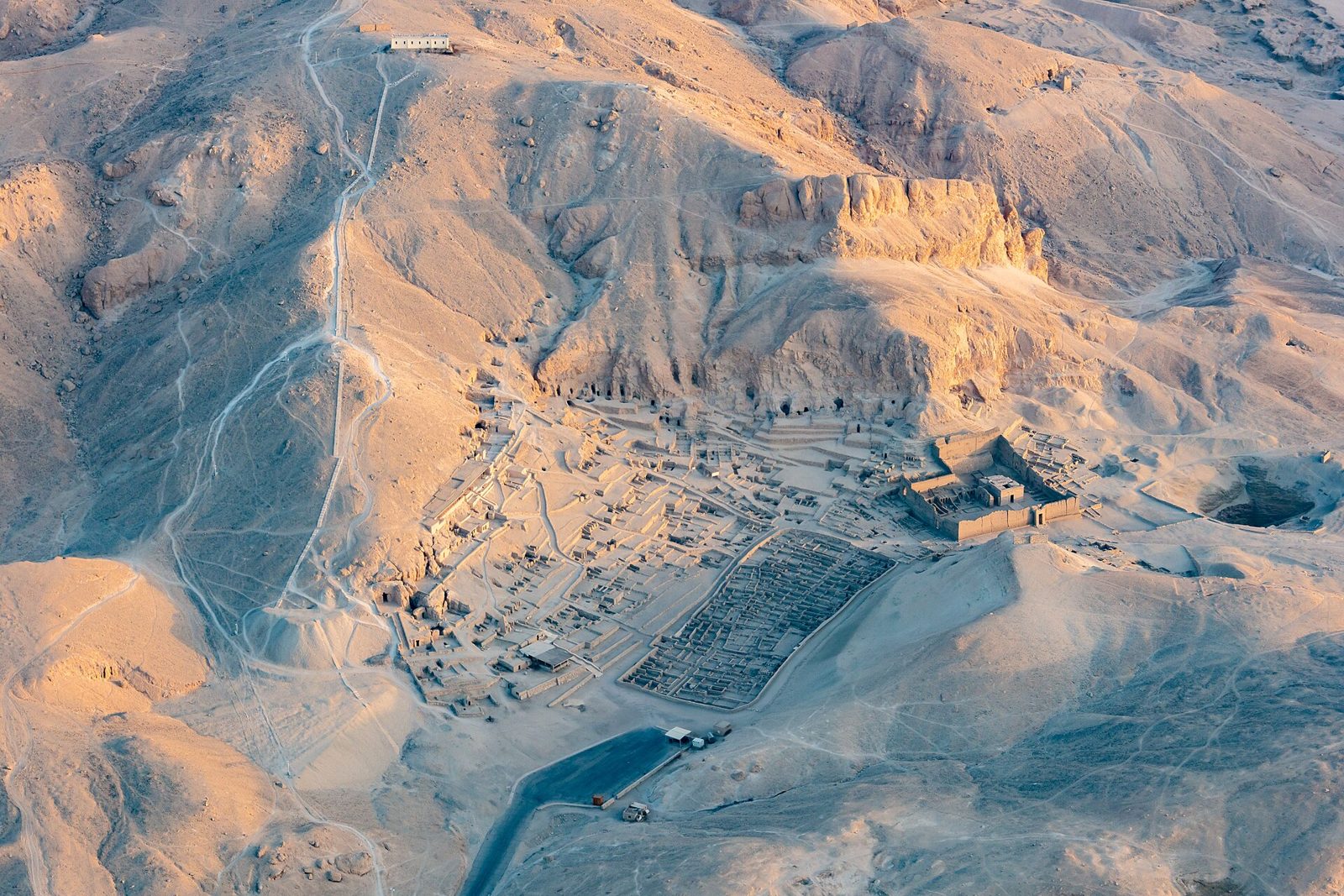
On the west bank of the Nile at Luxor, in a dry valley behind the hills, lie the stone foundations of a small walled village. For more than four hundred years, from around 1500 to 1080 BCE, this was home to the craftsmen who cut and painted the tombs in the Valley of the Kings.[1]
We know an unusual amount about the people who lived there, because they wrote everything down. Thousands of notes, letters, lists and drawings survive on flakes of limestone and broken pottery, called ostraca. Many people in the village, women among them, could at least read.[1] And so, for once, the women of an ordinary Egyptian community are not silent.
Deir el-Medina from the air: the long walled village, its house walls still standing in rows. Diego Delso / Wikimedia Commons, CC BY-SA 4.0.[6]
~68 housesInside the village walls at its largest
1/3A wife's share of the couple's joint property
8 childrenNamed in Naunakhte's will, three of them cut out
Mistress of the house
A married woman at Deir el-Medina carried the title nebet per, "mistress of the house." It was not a polite phrase. It described a job.
Each house was a narrow strip of rooms opening onto the street. In them, women raised children, baked the family's bread and supervised the brewing of beer.[1] Remember from Episode 4 that the men were paid in raw grain: sacks of emmer and barley. Turning those sacks into food was the women's work, and it began every morning with grinding.
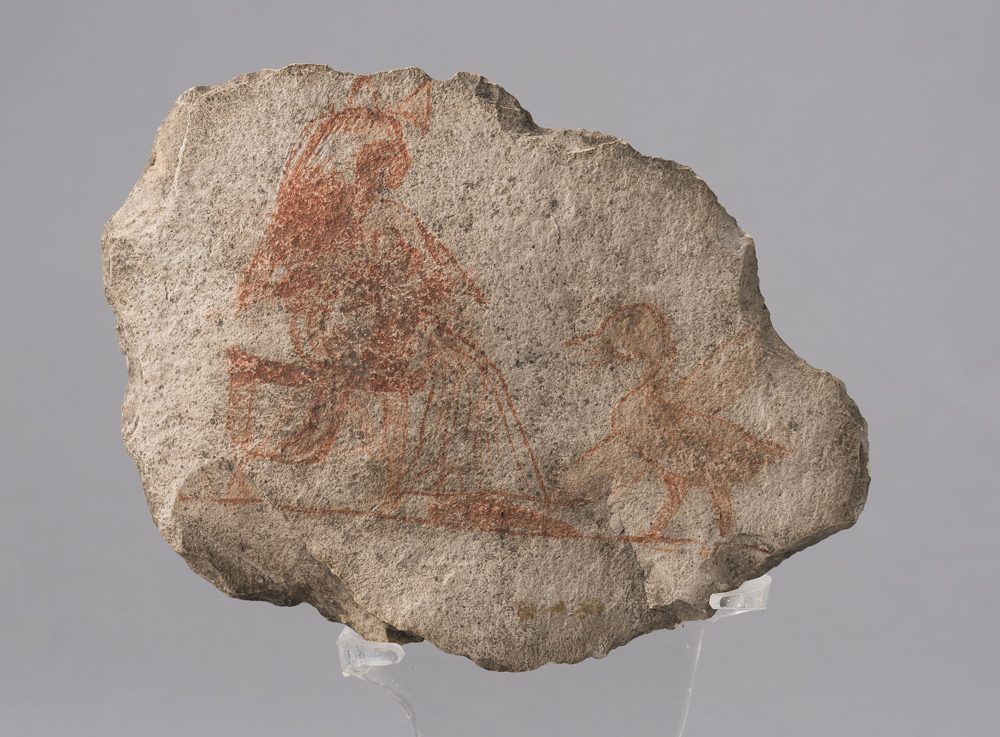
A woman nursing her baby, sketched in red on a flake of limestone. Museo Egizio, Turin. Wikimedia Commons, CC0.[8]
The men's wages arrived as grain. Women turned them into a living.
The grain arrived at the front door. It was ground, baked and brewed in the kitchen at the back.[1]
Help from the state
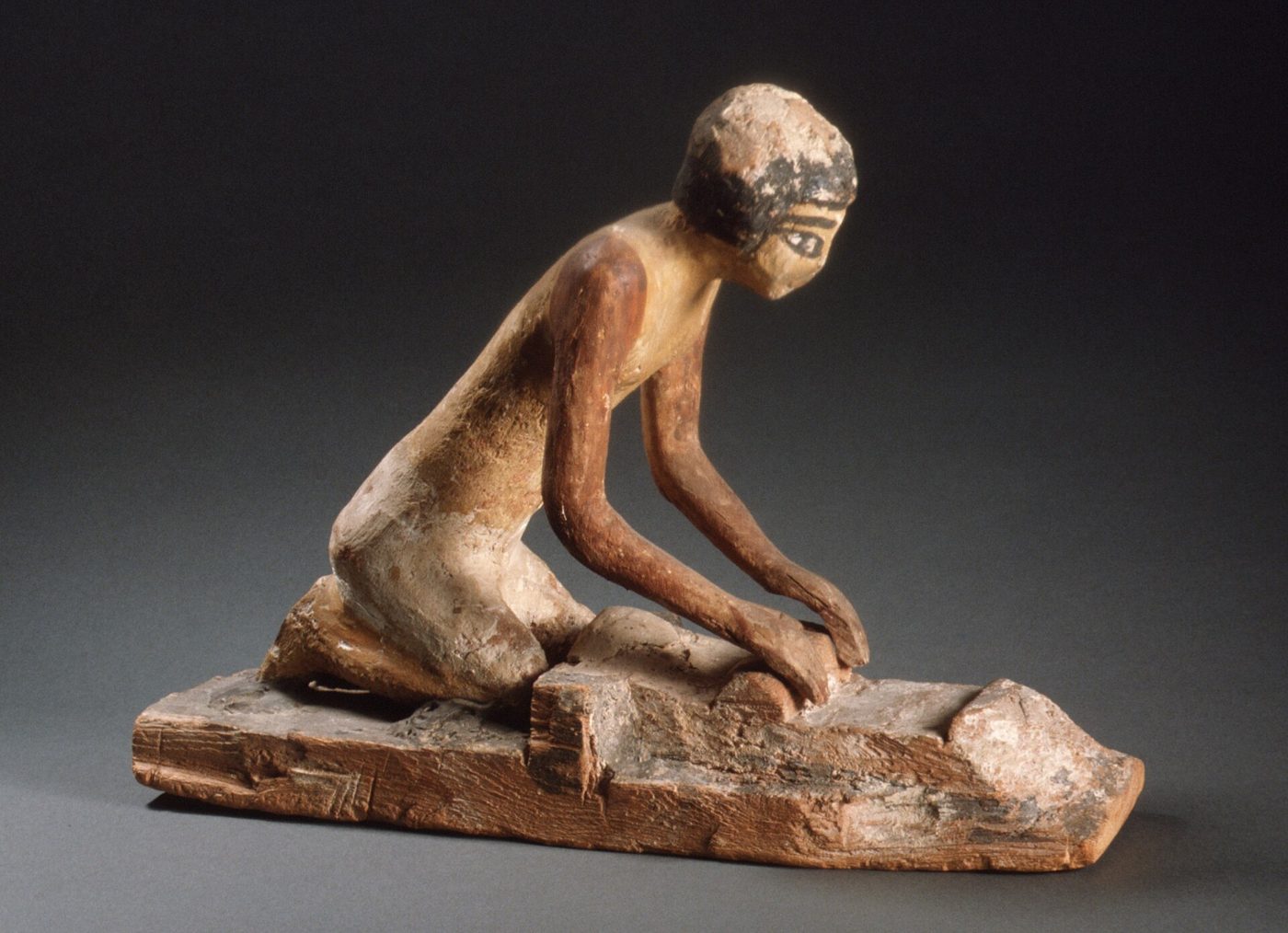
Grinding grain by hand on a stone takes hours a day. The state recognised this. Along with the grain, it assigned servants to the village to help with grinding and washing clothes.[1] It was one of the things the tomb-builders received for their work, alongside the grain itself.
A woman grinding grain on a saddle stone, from a tomb model, about 2100–2000 BCE. Los Angeles County Museum of Art. Wikimedia Commons, public domain.[7]
Recorded in the work register
The tomb-builders' attendance was checked every day, and the scribes wrote down why a man was missing. One register from the reign of Ramesses II, now in the British Museum, lists forty workmen over almost a year. Alongside "the scorpion stung him" and "eye trouble," it records men who stayed home because a woman in the house was menstruating:[2]
The two entries quoted from the register, with two other reasons from the same list.[2]
Ten workers on this list gave that reason. It did not happen every month, so it was probably accepted when a wife or daughter could not do her usual work, and someone had to take it over.[2] It is a small line in a list, but it tells us how much the household depended on her.
Women who owned things
Egyptian women could own, buy, sell and inherit property, and take a case to the local court. At Deir el-Medina a wife was entitled to a third of what the couple acquired during the marriage.[1]
The clearest example is a woman called Naunakhte. Around 1145 BCE, in the reign of Ramesses V, she stood before witnesses to make her will. She had eight children. Five of them, she said, had looked after her in her old age, and they would share her property. One son even received an extra bronze bowl. The other three had not supported her, and she left them nothing of her own.[3]
Naunakhte's eight children, as named in her will.[3]
Her will still exists, on papyrus, in the Ashmolean Museum in Oxford.[3]
The wise woman
When something went wrong that nobody could explain, villagers could go to the ta rekhet, "the wise woman." One surviving letter, after two baby boys died, asks a woman why she has not yet consulted the wise woman to learn whether the deaths were fate, or which god was responsible.[4] The letter does not name her. It seems everyone already knew who she was.
Weaving, and a warning
Women also spun and wove linen, and cloth was valuable enough to be used as payment. We know this partly from a complaint. In a long letter of accusations, a workman charged the foreman Paneb with many abuses, among them forcing the workmen's wives to weave clothing for him.[5] Their labour was worth stealing.
~1500 BCEThe village is founded in the reign of Thutmose I.
~1250 BCEA register records absences for wives' and daughters' menstruation.
~1145 BCENaunakhte makes her will.
~1080 BCEThe village is abandoned.
1928Naunakhte's will is found by the French Institute.[3]
None of these women was a queen. None has a statue in a museum hall. But through grain lists, letters and one stubborn will, we can still hear them: running households, owning property, deciding who deserved it, and holding a village together while the men worked on the kings' eternity.
They are exactly the kind of women the series The Women History Forgot was written for.
Ashraf Osman writes about ancient Egypt for everyone who loves it, starting with children and young adults. His books for young readers tell Egyptian history from a human point of view, so readers live the experience instead of memorising dates. This is episode 5 of Kemet Beyond the Pyramids.
Diego Delso, Deir el-Medina, Luxor, Egipto, 2022-04-03, DD 18.jpg, Wikimedia Commons. CC BY-SA 4.0. Resized.
Los Angeles County Museum of Art, Model of a Woman Grinding Grain, LACMA 51.15.10, Wikimedia Commons. Public domain. Resized.
Museo Egizio, Turin, Ostracon depicting a breastfeeding woman and a duck, S 6287, Wikimedia Commons. CC0. Resized.
كِمِت.. ما وراء الأهرام · الحلقة الخامسة
نساء دير المدينة
الرجال نحتوا مقابر الملوك، والنساء أبقين القرية حيّة، وتركن من الأثر أكثر مما توقّع أحد.
أشرف عثمان ·
على الضفة الغربية للنيل في الأقصر، في وادٍ جاف خلف التلال، تقوم أساسات حجرية لقرية صغيرة مسوّرة. على مدى أكثر من أربعمئة عام، من نحو 1500 إلى 1080 قبل الميلاد، كانت هذه بيت الحرفيين الذين نحتوا مقابر وادي الملوك ولوّنوها.[1]
ونحن نعرف عن أهلها قدرًا غير معتاد، لأنهم كانوا يكتبون كل شيء. فقد بقيت آلاف الملاحظات والرسائل والقوائم والرسوم على شظايا الحجر الجيري وكسر الفخار، وتسمى «الأوستراكا». وكان كثير من أهل القرية، ومنهم نساء، يعرفون القراءة على الأقل.[1] ولهذا، ولمرة نادرة، لا تبقى نساء مجتمع مصري عادي صامتات.
دير المدينة من الجو: القرية المسوّرة الطويلة، وما زالت جدران بيوتها قائمة في صفوف. تصوير Diego Delso / ويكيميديا كومنز، رخصة CC BY-SA 4.0.[6]
نحو 68 بيتًاداخل أسوار القرية في أكبر اتساعها
الثلثنصيب الزوجة من الممتلكات المشتركة
8 أبناءذكرتهم وصية ناو-نخت، وحرمت ثلاثة منهم
سيدة البيت
كانت المرأة المتزوجة في دير المدينة تحمل لقب «نِبِت بِر»، أي «سيدة البيت». ولم يكن لقب مجاملة، بل وصفًا لعمل.
كان كل بيت شريطًا ضيقًا من الغرف يطل على الشارع. وفيه كانت النساء يربّين الأطفال، ويخبزن خبز الأسرة، ويُشرفن على تخمير الجعة.[1] وتذكّر من الحلقة الرابعة أن الرجال كانوا يتقاضون أجرهم حبوبًا خامًا: أجولة من الإمّر والشعير. وتحويل هذه الأجولة إلى طعام كان عمل النساء، ويبدأ كل صباح بالطحن.
امرأة ترضع طفلها، مرسومة بالأحمر على شظية من الحجر الجيري. المتحف المصري في تورينو. ويكيميديا كومنز، رخصة CC0.[8]
كان أجر الرجال يصل حبوبًا، والنساء هنّ من يحوّلنه إلى حياة.
كانت الحبوب تصل إلى الباب الأمامي، وتُطحن وتُخبز وتُخمَّر في المطبخ الخلفي.[1]
عون من الدولة
طحن الحبوب باليد على الحجر يستغرق ساعات كل يوم. وقد أدركت الدولة ذلك، فخصصت للقرية، إلى جانب الحبوب، خادمات يساعدن في الطحن وغسل الثياب.[1] وكان ذلك من جملة ما يناله بنّاؤو المقابر مقابل عملهم، إلى جانب الحبوب نفسها.
امرأة تطحن الحبوب على حجر الرحى، من نموذج جنائزي، نحو 2100–2000 قبل الميلاد. متحف مقاطعة لوس أنجلوس للفنون. ويكيميديا كومنز، ملكية عامة.[7]
في سجل الحضور
كان حضور بنّائي المقابر يُراجع كل يوم، ويكتب الكتبة سبب غياب كل رجل. وفي سجل من عهد رمسيس الثاني، محفوظ اليوم في المتحف البريطاني، أسماء أربعين عاملًا على مدى عام تقريبًا. وإلى جانب «لدغته عقرب» و«ألم في العين»، يسجّل رجالًا بقوا في بيوتهم لأن امرأة في البيت كانت في فترة الحيض:[2]
السطران المقتبسان من السجل، مع سببين آخرين من القائمة نفسها.[2]
عشرة عمال في هذا السجل ذكروا هذا السبب. ولم يتكرر كل شهر، فالأرجح أنه كان مقبولًا حين لا تستطيع الزوجة أو الابنة القيام بعملها المعتاد، فيضطر أحد إلى تولّيه عنها.[2] إنه سطر صغير في قائمة، لكنه يخبرنا كم كان البيت يعتمد عليها.
نساء يملكن
كانت المرأة المصرية تملك وتشتري وتبيع وترث، وترفع قضيتها إلى المحكمة المحلية. وفي دير المدينة كان للزوجة حق في ثلث ما يكسبه الزوجان أثناء الزواج.[1]
وأوضح مثال امرأة اسمها ناو-نخت. نحو عام 1145 قبل الميلاد، في عهد رمسيس الخامس، وقفت أمام الشهود لتكتب وصيتها. كان لها ثمانية أبناء. خمسة منهم، كما قالت، رعوها في شيخوختها، فهم يقتسمون ما تملك، بل نال أحدهم وعاءً من البرونز زيادةً. أما الثلاثة الآخرون فلم يعينوها، فلم تترك لهم شيئًا مما تملكه.[3]
أبناء ناو-نخت الثمانية كما وردت أسماؤهم في وصيتها.[3]
وما زالت وصيتها موجودة على البردي في متحف الأشموليان بأكسفورد.[3]
المرأة الحكيمة
حين يقع ما لا يجد له أحد تفسيرًا، كان أهل القرية يلجؤون إلى «تا رِخِت»، أي «المرأة الحكيمة». وفي رسالة باقية، بعد وفاة طفلين رضيعين، يسأل الكاتب امرأة لماذا لم تذهب بعد إلى المرأة الحكيمة لتعرف هل كان الموت قدرًا، أو أيّ إله كان وراءه.[4] والرسالة لا تذكر اسمها، وكأن الجميع كانوا يعرفون من هي.
النسيج، وشكوى
وكانت النساء أيضًا يغزلن الكتان وينسجنه، وكان القماش ثمينًا حتى إنه يُستخدم في الدفع. ونعرف ذلك جزئيًا من شكوى. ففي رسالة طويلة من الاتهامات، اتهم أحد العمال رئيس العمال بانِب بتجاوزات كثيرة، منها أنه أجبر زوجات العمال على أن ينسجن له الثياب.[5] كان عملهن ثمينًا إلى حد أنه يُسرق.
نحو 1500 ق.متأسيس القرية في عهد تحتمس الأول.
نحو 1250 ق.مسجل يدوّن الغياب بسبب حيض الزوجات والبنات.
لم تكن أيٌّ من هؤلاء النساء ملكة، ولا لواحدة منهن تمثال في قاعة متحف. لكننا من خلال قوائم الحبوب والرسائل ووصية امرأة عنيدة ما زلنا نسمعهن: يُدرن البيوت، ويملكن، ويقرّرن من يستحق، ويحفظن القرية متماسكة بينما يعمل الرجال في أبدية الملوك.
وهؤلاء بالضبط هن النساء اللواتي كُتبت من أجلهن سلسلة «نساء نسيهنّ التاريخ».
يكتب أشرف عثمان عن مصر القديمة لكل من يحبها، بدءًا بالأطفال والشباب. وتروي كتبه للقراء الصغار تاريخ مصر من منظور إنساني، فيعيش القارئ التجربة بدل أن يحفظ التواريخ. هذه هي الحلقة الخامسة من سلسلة «كِمِت.. ما وراء الأهرام».